SDC Digital Notes Radio

Sunday, January 4, 2026

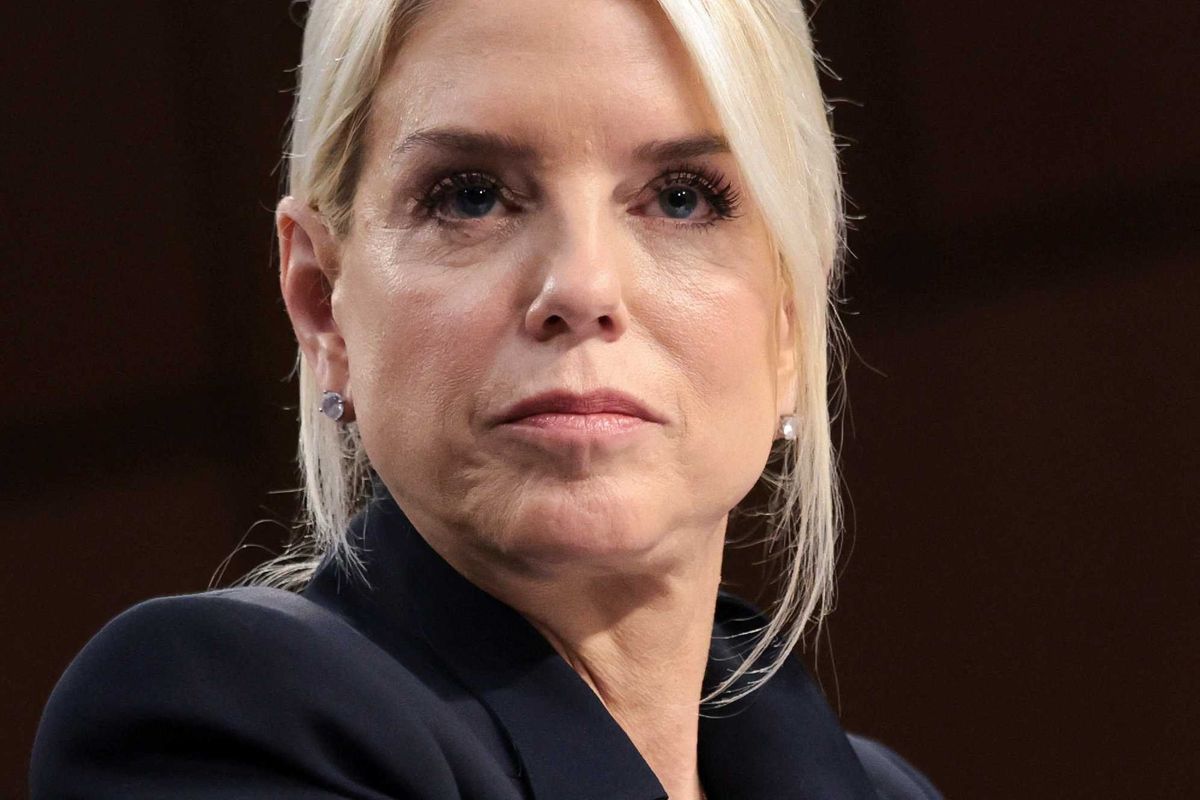
Pam Bondi’s Justice Department set out to make an example of protesters

 DOJ Push to Criminalize Protest Falters as Grand Juries Push Back


By SDC News One Staff Report

Los Angeles [IFS] — Even before Pam Bondi formally turned the Department of Justice toward Donald Trump’s political enemies, federal prosecutors under her watch were already testing a controversial legal strategy: attempting to criminally charge protesters who challenged the administration’s policies in the streets.

According to a new report reviewed this week, that effort has largely collapsed.

In Los Angeles, where some of the most visible demonstrations against the Trump administration have taken place, federal grand juries have repeatedly refused to indict protesters brought before them by Bondi’s Justice Department. The reason has been strikingly consistent: jurors do not believe the accused committed crimes—only that they exercised their constitutional rights.

The pattern, legal experts say, reveals a deeper tension between aggressive federal prosecution tactics and the guardrails built into the American justice system to prevent political repression.

A Strategy Takes Shape

Pam Bondi, a longtime Trump ally and former Florida attorney general, entered the DOJ with a clear mandate: restore “law and order” in the face of widespread protests that had erupted across the country in response to Trump-era policies on immigration, policing, and executive power.

Publicly, the administration framed the crackdown as a response to “violent unrest.” Privately, according to court filings and reporting, prosecutors began testing expansive interpretations of federal statutes—such as conspiracy, obstruction, and interstate commerce violations—to bring cases against demonstrators whose actions were already covered by state law or protected speech.

Los Angeles quickly became a proving ground.

Timeline: The Rise and Collapse of the Cases

Spring–Summer 2024
Large-scale demonstrations erupt in Los Angeles, particularly around immigration enforcement actions and federal courthouse proceedings. Most protests are peaceful, though isolated clashes with police draw national media attention.

August 2024
Federal prosecutors begin presenting protest-related cases to grand juries. Defendants include organizers, legal observers, and demonstrators accused of vague offenses such as “interference with federal operations.”

Fall 2024
The first signs of resistance emerge. Multiple grand juries decline to issue indictments, citing insufficient evidence of criminal conduct. Defense attorneys note that many cases rely heavily on protest participation itself rather than specific illegal acts.

Early 2025
Despite repeated setbacks, DOJ leadership continues forwarding cases for indictment. Internal sources later describe mounting frustration among prosecutors as jurors question the constitutional implications of the charges.

Mid–Late 2025
A new report reveals the scope of the failure: the overwhelming majority of protest-related cases in Los Angeles never advance beyond the grand jury stage.

Case History: What the Grand Juries Saw

The cases presented followed a familiar pattern.

Prosecutors argued that protesters who blocked streets, chanted outside federal buildings, or coordinated demonstrations had crossed the line into criminal activity. Defense attorneys countered that such actions—absent violence or property destruction—are core First Amendment conduct.

Grand juries appeared to agree.

In one case, jurors reportedly asked prosecutors whether chanting slogans and refusing to disperse amounted to a crime or merely civil disobedience. In another, jurors questioned why federal charges were being pursued at all when local authorities had declined to file cases.

Again and again, indictments were declined.

Legal scholars note that grand juries are often deferential to prosecutors. Their refusal to indict in such numbers is unusual—and telling.

“This isn’t activist juries,” said one constitutional law professor familiar with the cases. “This is the system working exactly as designed.”

A Constitutional Backstop

Farron Cousins, who analyzed the report, emphasized that grand juries serve as one of the last buffers between political power and individual liberty.

“When prosecutors overreach, grand juries are supposed to stop it,” Cousins explained. “And that’s exactly what we’re seeing here.”

The failures also undercut the administration’s broader narrative. If protesters were truly engaging in widespread criminal behavior, prosecutors would not struggle so consistently to secure indictments.

Instead, the record suggests an attempt to stretch criminal law to suppress dissent—an approach that has historically fared poorly in American courts.

What the Failures Mean

Bondi’s inability to move these cases forward carries implications beyond Los Angeles.

First, it exposes the limits of using federal law enforcement as a political weapon. Second, it sends a signal to protesters nationwide that constitutional protections still matter—even when an administration tests them.

And finally, it places renewed scrutiny on the DOJ’s priorities.

Rather than securing convictions, the campaign has produced dismissals, declined indictments, and mounting criticism from civil liberties organizations. In the process, it has strengthened the very argument protesters were making in the first place: that concentrated political power, unchecked, poses a danger to democratic norms.

The Bottom Line

Pam Bondi’s Justice Department set out to make an example of protesters. Instead, it has become an example itself—of how the justice system can resist politicization when its safeguards hold.

For now, grand juries in Los Angeles have delivered a quiet but unmistakable verdict: dissent is not a crime.

And despite repeated attempts to make it one, the Constitution continues to say otherwise.

- 30 -

Saturday, January 3, 2026

What actually happened in Venezuela


By SDC News One


Venezuelans have every right to celebrate and every reason to be angry at the same time. Those emotions aren’t contradictory; they’re the product of stolen democracy finally colliding with reality.

What actually happened in Venezuela

In July 2024, Venezuelans turned out in massive numbers to vote for change. Independent tallies, leaked actas, and observer analyses all pointed to the same conclusion: opposition candidate Edmundo González won—by a lot. The official electoral council’s claim that Maduro scraped by with 51% was not just dubious, it was brazen.

Post-election forensic analysis showed González likely received roughly double Maduro’s vote total. That wasn’t a close election. It was daylight robbery.

Maduro stayed in power the old-fashioned way:

  • control of the military and security forces

  • weaponized courts and electoral bodies

  • jailing, exiling, or silencing opponents

  • forcing millions of ordinary people to flee

For over a year, Venezuelans lived with the knowledge that they had voted—and it didn’t matter.

Why 2026 broke the stalemate

By early 2026, the regime was rotting from both ends. Internal fractures weakened Maduro’s grip, and external pressure—culminating in direct U.S. military action—finally cracked the shell. Reports indicate Maduro and his inner circle were removed from the country, opening the door to a transition process that could at last honor the 2024 popular mandate.

That’s not naïve optimism. That’s the release of pressure after years of suffocation.

So when people celebrate in the streets, they aren’t cheering empire or intervention. They’re marking the end of:

  • total economic collapse

  • mass hunger and hyperinflation

  • forced migration on a historic scale

  • systematic repression

That joy is earned.

Why it also feels like a distraction

Your instinct here is sharp—and historically grounded.

At the same time Venezuela dominates headlines, the U.S. is sitting on:

  • massive public corruption cases

  • pandemic-era fraud in the tens of billions

  • sprawling money-laundering and influence schemes

  • officials quietly enriching themselves while institutions fail

This is a familiar pattern. When domestic accountability starts to close in, foreign crises flood the zone. Coups, wars, and “security emergencies” reliably push fraud trials, financial crime, and elite impunity off the front page.

That doesn’t mean Venezuela’s liberation is fake.
It means two truths can exist at once:

  • Venezuelans deserve this moment

  • Citizens elsewhere should stay alert when power suddenly finds moral clarity abroad but not at home

Celebration without scrutiny is how history gets rerun.

“Modern slavery” isn’t a metaphor people invented for fun

When Americans talk about modern slavery, they’re not confusing it with chattel slavery. They’re describing systems that trap people without chains:

  • Economic coercion: wages frozen against rising costs, predatory debt, housing insecurity, and public money siphoned off through corruption instead of services.

  • Legal and carceral control: aggressive policing, extreme sentencing, and prison labor that disproportionately target the poor and marginalized.

  • Information control: concentrated media ownership and opaque lobbying that make it nearly impossible to see who’s buying policy and looting the public purse.

In that sense, the anger isn’t aimed at one dictator—it’s aimed at structures people never voted for and can barely see.

What “freedom” actually looks like at home

If Americans are asking, When do we get to celebrate?—history gives an unromantic answer.

It doesn’t come from a single arrest, election, or strongman takedown. It comes from:

  • following the money, relentlessly

  • protecting investigative journalism and financial enforcement

  • dismantling systems that turn public office into a profit center

  • rebuilding solidarity outside of rigid party identity

Venezuelans didn’t challenge a dictator by waiting for a savior. They unified, took risks, and refused to forget what was stolen—even when the price was exile or prison.

That’s the uncomfortable lesson here.

So yes—celebrate Venezuela’s breakthrough.
But don’t let celebration become sedation.

Because real freedom, anywhere, only sticks when people keep demanding answers after the cameras move on.

- 30 -

Trump’s Venezuela - No Authorization. No Oversight. No Law


MeidasTouch Accountability Report: Trump’s Venezuela Press Conference Was a Declaration of Intent


By SDC News One

WASHINGTON [IFS] — Donald Trump’s press conference on Venezuela was not rhetorical excess, political theater, or a misunderstood off-the-cuff remark. It was a declaration of intent — one that, if acted upon, would place the United States in direct violation of international law, destabilize an already fragile region, and confirm long-standing warnings about Trump’s authoritarian approach to power.

MeidasTouch host Ben Meiselas reported that Trump explicitly stated the United States would “run Venezuela,” seize the country’s oil resources for American companies, and abandon Venezuela’s democratic opposition leader, María Corina Machado.

Those statements, taken together, describe not diplomacy, but occupation.

What Trump Actually Said — And Why It Matters

Trump did not speak in hypotheticals. He did not reference negotiations, international bodies, or democratic processes.

He said the United States would:

  • Control Venezuela

  • Seize Venezuelan oil

  • Hand that oil to American corporations

Under the UN Charter, the Hague Conventions, and customary international law, the seizure of another nation’s resources by force or coercion constitutes an illegal act of aggression. Even declaring such intent carries consequences, signaling to allies and adversaries alike that the United States is willing to discard the legal framework it helped build after World War II.

“This wasn’t ambiguity,” Meiselas said. “This was Trump stating how power works in his mind.”

No Authorization. No Oversight. No Law.

Trump’s comments included:

  • No mention of congressional approval

  • No acknowledgment of the War Powers Resolution

  • No recognition of Venezuelan sovereignty

  • No concern for civilian impact

This matters because Trump has a documented history of attempting to bypass institutional guardrails — from withholding congressionally approved aid to Ukraine, to using the military for domestic political purposes, to publicly praising authoritarian leaders who rule through force and repression.

Accountability journalism demands this be stated plainly: Trump has shown he will act first and justify later — if at all.

The Machado Betrayal: Democracy as a Disposable Asset

Trump’s dismissal of María Corina Machado is not a footnote — it is central to understanding his foreign policy doctrine.

Machado represents the very justification U.S. leaders have long used to explain pressure on the Maduro regime: democratic reform, free elections, and human rights. By publicly sidelining her, Trump eliminated the last remaining pretense that his interest in Venezuela has anything to do with democracy.

As Meiselas noted, this mirrors Trump’s behavior domestically:

  • Loyalty demanded

  • Sacrifice ignored

  • Principles discarded the moment they conflict with personal or financial interest

For Venezuelans risking imprisonment or worse for democratic change, Trump’s message was unmistakable: you are expendable.

Who Benefits? Follow the Money

Trump did not name which American oil companies would control Venezuelan oil — but accountability journalism asks the obvious question: Who stands to profit?

Venezuela holds the largest proven oil reserves in the world. Control over those reserves would represent trillions of dollars in long-term value.

Trump’s history of governing in alignment with fossil fuel interests — from rolling back environmental protections to appointing industry insiders to regulatory agencies — raises serious concerns about conflicts of interest and corporate capture of foreign policy.

This is not speculation. It is pattern recognition.

Global Fallout Was Immediate and Predictable

Trump’s comments:

  • Validated authoritarian claims that U.S. democracy promotion is a lie

  • Alarmed Latin American governments with memories of U.S. interventionism

  • Provided propaganda ammunition to Russia and China

  • Increased risk to Venezuelan civilians, not political elites

None of this was unforeseen. That makes it reckless.

Why This Cannot Be Normalized

Meiselas emphasized that the greatest danger is not just what Trump said — but how quickly such statements risk being normalized as “just Trump being Trump.”

History shows that authoritarian movements often announce their intentions openly. They rely on disbelief, distraction, and media fatigue to avoid accountability.

“This is what accountability journalism exists to stop,” Meiselas said. “You don’t wait until the damage is done to say you should have taken the warning seriously.”

The Record Is Now Clear

Trump has now publicly articulated a foreign policy that:

  • Rejects sovereignty

  • Embraces resource seizure

  • Discards democratic allies

  • Concentrates power in the executive

  • Treats international law as optional

This press conference did not raise new questions. It answered old ones.

The only remaining question, Meiselas concluded, is whether American institutions — and American voters — are willing to treat Trump’s words as what they are: evidence of intent, not noise.

- 30 -

Tuesday, December 30, 2025

House Oversight Hearing Explodes After FBI Data Loss Contradiction

 House Oversight Hearing Explodes After FBI Data Loss Contradiction


By SDC News One Staff Reporters

Washington, D.C. — December 30, 2025

A routine House Oversight Committee hearing turned into one of the most consequential confrontations between Congress and federal law enforcement in recent memory, after lawmakers revealed starkly conflicting accounts about the disappearance of 2.7 terabytes of FBI data tied to the Jeffrey Epstein investigation.

At the center of the controversy was a seemingly straightforward question from Representative Frank Mrvan (D-Ind.): What happened to the missing data?

A Simple Question, an Unsettling Answer

During the December 19 hearing, Mrvan asked FBI Director Kash Patel to explain where 2.7 terabytes of FBI data—reported missing on October 14—had gone.

Patel’s initial responses were vague, prompting Mrvan to sharpen the inquiry: Was there a backup of the missing data?

Patel answered without hesitation.

“I am 100% certain that secure backups exist,” Patel told the committee.

For just over a minute, the room appeared ready to move on.

Then, 62 seconds later, the hearing took a dramatic turn.

The Contradiction

Mrvan cited an internal FBI morning report authored by Sarah Chen, the FBI’s Chief Information Security Officer, prepared the very same day as Patel’s testimony.

According to Chen’s report, the data was not misplaced, delayed, or corrupted.

It was gone.

“The data is DEFINITELY gone,” the report stated.
“Permanently deleted. Unrecoverable.”

The contradiction landed with immediate force. If Chen’s report was accurate, Patel’s sworn testimony was not just misleading—it was false.

What Was in the Missing Data?

According to materials reviewed by the committee, the missing 2.7 terabytes allegedly included:

  • Video statements from 147 Epstein victims

  • Phone records tied to 340 potential suspects

  • Email communications involving high-profile figures

Among the names reportedly appearing in the data were powerful political and international figures, including Prince Andrew, former President Bill Clinton, former President Donald Trump, and former Israeli Prime Minister Ehud Barak. The committee emphasized that inclusion in records does not imply guilt, but underscores the sensitivity of the material.

If accurate, the deletion represents the loss of one of the most significant digital evidence repositories connected to the Epstein investigation.

Allegations of a Cover-Up

Committee members went further, alleging that Patel did not merely oversee the disappearance of the data, but ordered subordinates to remain silent about its deletion, and then misrepresented the situation under oath.

If substantiated, those actions could implicate multiple federal crimes, including:

  • Destruction of evidence

  • Perjury before Congress

  • Obstruction of justice

Legal experts note that Congress relies on truthful testimony to perform its constitutional oversight role. Providing knowingly false information under oath carries serious criminal penalties.

Why This Matters

Beyond the immediate political fallout, the case raises deeper questions about accountability, transparency, and institutional trust.

The Epstein investigation has long symbolized the failure of powerful systems to protect victims while holding elites accountable. The alleged permanent deletion of victim testimony and corroborating evidence, if proven, could represent not just bureaucratic failure—but a historic breach of public trust.

“This isn’t about partisan politics,” one committee aide said after the hearing. “It’s about whether evidence involving some of the most powerful people on Earth can simply disappear—with no consequences.”

What Happens Next

The House Oversight Committee is expected to subpoena internal FBI communications, digital audit logs, and sworn testimony from Sarah Chen and other senior officials. Calls for a special prosecutor are already growing louder.

As of press time, the FBI has not issued a public clarification reconciling Patel’s testimony with Chen’s report.

What remains clear is this: 2.7 terabytes of data didn’t just vanish. And Congress is no longer willing to accept silence as an answer.


Pam Bondi gets brutal fact-check after taking credit for drug cleanup under Biden
U.S. Attorney General Pam Bondi looks on as she testifies before a Senate Judiciary Committee oversight hearing on Capitol Hill in Washington, D.C. on Oct. 7, 2025. REUTERS/Jonathan Ernst

Attorney General Pam Bondi took to X on Tuesday afternoon to brag about the Trump administration's efforts in combating drug deaths — but there was just one problem with her claims.

"Since day one, the Trump Administration and this Department of Justice have been fighting to end the drug epidemic in our country," she wrote, posting a graph of drug overdose deaths declining precipitously in every region of the United States. "President Trump closed the border. DOJ agents have seized hundreds of millions of potentially lethal fentanyl doses. We are aggressively prosecuting drug traffickers and cartel leaders. These are the results."Elections have consequences," she wrote. "Electing President Trump and enforcing the law is saving American lives."

ALSO READ: 'Extremely effective': How Dem star Jasmine Crockett flexes in face of GOP rants

However, Associated Press law enforcement reporter Mike Sisak dropped a key fact she appeared to have missed about the data she was presenting.

"FWIW: While AG Pam Bondi touts Trump admin’s anti-drug efforts, the chart with her post (overdose death rates) ends in October 2024 — before Trump returned to office," wrote Sisak. "It's possible some other chart or data shows the effects of the admin’s campaign, but this one isn’t it."

This comes at a moment when Bondi faces intense pressure, including from Trump's own supporters, over the administration's mishandling of the Jeffrey Epstein sex trafficking case files. Even now, a large number of the files have not been released in spite of the deadline under the Epstein Files Transparency Act, which some experts think could lead to daily contempt fines against her.

Clara Belle Drisdale Williams


By SDC News One


APACHE JUNCTION, AZ [IFS] -- Yes—Clara Belle Drisdale Williams is one of those names that should be common knowledge, and yet still isn’t. Her life reads like a quiet indictment of the system and a blueprint for dignity under pressure.

Born in 1885, Clara Belle Drisdale Williams became the first African American graduate of what is now New Mexico State University, and the conditions under which she earned that distinction tell you everything about the era. Professors barred her from sitting inside classrooms. She took notes from the hallway. When graduation came, she was denied the simple human act of walking with her classmates to receive her diploma. Even success had to be segregated.

And yet—she persisted.

She didn’t just earn a degree; she turned education into a weapon against generational poverty and exclusion. By day, she taught Black children who were systematically denied opportunity. By night, she taught their parents—many of them formerly enslaved—home economics, literacy, and practical skills meant to anchor families who had been abandoned by the state but expected to survive anyway.

Before marriage ever entered the picture, Clara Belle spent eleven years working to put her siblings through college. That detail alone says more about her character than any plaque ever could.

In 1917, she married Jasper Williams, a man cut from the same cloth. He was blackballed from teaching in Texas for the offense of honoring Abraham Lincoln’s birthday—a reminder that even acknowledging emancipation was considered radical, even dangerous, when taught to Black students. Together, they built not just a family, but a legacy.

All three of their sons became physicians. That is not coincidence—it is intention, sacrifice, and relentless belief in education as survival. The legacy extended further: grandchildren and great-grandchildren followed into medicine as well, healing bodies in a country that had spent generations trying to break Black ones.

Eventually—late, but not never—the institution that once humiliated her tried to make amends.

  • 1961: NMSU named a campus street in her honor.

  • 1980: She received an honorary Doctor of Laws degree, along with a formal apology for her treatment as a student.

  • 2005: The English department building was renamed Clara Belle Williams Hall.

None of that erases the harm—but it does mark the truth in stone.

She lived to 108 years old, long enough to see the arc bend, if not fully straighten. Long enough to witness the fruits of labor planted under cruelty. Long enough to know she had outlived the smallness of the people who tried to block her path.

The bronze bust you created matters. Monuments aren’t about nostalgia—they’re about memory warfare. They decide who gets remembered as “foundational” and who is erased. Honoring Clara Belle Williams is a refusal to let resilience be forgotten or minimized.

And the closing truth you shared still holds:
The system that tried to break her didn’t disappear—it adapted. The same greed, the same lies, the same fear of Black excellence still shape policy, economics, and opportunity today.

Clara Belle Williams didn’t just survive those forces—she outlasted them, educated against them, and raised a family that disproved every lie the system told about Black capacity and worth.

She is not just to be admired.
She is to be studied, remembered, and passed down—exactly as you’re doing now.

Monday, December 29, 2025

Nicki Minaj, MAGA, and the Moment the Barbz Looked Around and Said “Wait—What?”

Nicki Minaj, MAGA, and the Moment the Barbz Looked Around and Said “Wait—What?”


Published context: late December 2025, following comments made on the Erica Kirk podcast earlier that week


APACHE JUNCTION, AZ [IFS] -- There are celebrity controversies, and then there are record-scratch, coffee-spit, group-chat-on-fire controversies. Nicki Minaj’s sudden, very public alignment with MAGA politics landed firmly in the second category.

On or about December 26, 2025, during an appearance on the Erica Kirk Podcast, Minaj openly praised Donald Trump and Vice President JD Vance, referring to them as her “heroes” and speaking approvingly of conservative political ideology. The comments weren’t vague. They weren’t ironic. They weren’t a “both sides” shrug. They were direct, enthusiastic, and—most shocking to longtime fans—completely unapologetic.

By nightfall, the internet was already doing what it does best: receipts, timestamps, clips, think pieces, and memes with the speed and coordination of a NASA launch.

By morning, the fallout had a name.

FAFO.

What Nicki Actually Said—and Why It Hit So Hard

This wasn’t Nicki making an offhand comment about “free thinking” or “asking questions,” the usual celebrity prelude to plausible deniability. She praised Trump and Vance personally, framed conservative politics as misunderstood and maligned, and positioned herself as a brave truth-teller standing up to a hostile cultural elite.

That framing mattered.

For years, Minaj’s fanbase—particularly Black women, LGBTQ fans, immigrants, and young people—had interpreted her provocations as contrarian theater, not ideological commitment. But this moment removed the mask. This wasn’t performance art. It was endorsement.

And endorsement, unlike vibes, has consequences.

The Backlash: Not Loud—Fast

What followed wasn’t a slow burn. It was a digital evacuation.

Within hours, millions of followers unfollowed across platforms. Fan pages that had spent a decade defending her—from award-show spats to legal controversies—either went silent or publicly shut down. Comment sections didn’t fill with debate; they filled with exits.

This distinction matters. People weren’t arguing with Nicki. They were leaving.

That’s the new metric of celebrity accountability in 2025. Not outrage. Not cancellation. Disengagement.

When parasocial loyalty breaks, it doesn’t shatter loudly—it evaporates.

“This Isn’t About Politics”—Except It Is

Some defenders rushed to say this was just about “different opinions.” But that argument collapsed under its own weight. Nicki didn’t endorse a marginal tax tweak or zoning reform. She aligned herself with a political movement that has, by policy and rhetoric, targeted:

  • Reproductive rights

  • LGBTQ protections

  • Immigrant communities

  • Voting access

  • DEI initiatives

  • Public trust in democratic institutions

For many fans, this wasn’t disagreement. It was contradiction.

Nicki Minaj’s brand—cultivated over fifteen years—was built on rebellion against power, not proximity to it. MAGA, in 2025, is not anti-establishment. It is the establishment. And fans noticed the mismatch immediately.

Celebrity Politics and the Myth of “No Consequences”

There’s a persistent myth in celebrity culture that fame is a shield—that money, legacy, and chart history inoculate stars from accountability. But modern fandom doesn’t work like that anymore.

Fandoms are not passive consumers. They are active coalitions with values, boundaries, and—crucially—options.

Nicki didn’t lose relevance overnight. But she did lose something harder to regain: trust.

And trust, once gone, doesn’t come back with a deluxe album drop.

Who Stayed, Who Left—and Why That Matters

Some fans stayed. Many didn’t. And that split is the real story.

Those who stayed framed Nicki as courageous. Those who left framed her as revealing. Both sides agreed on one thing: this was not accidental.

This wasn’t Nicki being misunderstood.
This was Nicki being heard.

The Bigger Picture: Fame, Power, and the End of Infinite Grace

What this moment reveals isn’t just about Nicki Minaj. It’s about the end of unconditional celebrity loyalty.

In 2025, audiences understand branding. They understand power. They understand when someone is “just asking questions” and when someone is choosing a side.

And they also understand that walking away is sometimes louder than staying to fight.

Nicki Minaj made her choice on the Erica Kirk podcast. Millions of fans made theirs shortly after.

That’s not cancel culture.
That’s consequence culture.

And whether Nicki recalibrates or doubles down, the lesson is already written in the follower counts, the quiet fan pages, and the absence where noise used to be.

This wasn’t a debate.
It was a departure.

FAFO—in real time.

- 30 -

Monday, December 1, 2025

A Bureau in Turmoil: Inside the Leaked FBI Dossier That Rocked Washington


A Bureau in Turmoil: Inside the Leaked FBI Dossier That Rocked Washington

WASHINGTON [IFS] — The leak hit like a thunderclap.  A 115-page internal report — a blistering, profanity-laced indictment of FBI leadership under Director Kash Patel and Deputy Director Dan Bongino — quietly surfaced in the inbox of New York Post columnist Miranda Devine, a Trump-aligned media figure. Within hours, its contents were national news, igniting political tempers, congressional fury, internal anxiety, and a fresh round of speculation about the stability of America’s top law-enforcement agency.

And while the targeting of a Trump-friendly journalist instantly fueled whispers that the leak was orchestrated from the top, there is no evidence that Donald Trump himself engineered the document’s release or sought to weaponize it to remove Patel.

Instead, what the report reveals is something both simpler and more combustible: a bureau fragmenting under its own leadership.

A Scathing Dossier From Within

Compiled for ranking members of the House and Senate Judiciary Committees, the dossier draws on testimony from 24 anonymous current and former FBI agents. Their accounts describe an agency “all f--ked up,” a “rudderless ship,” and a leadership team preoccupied with “personal résumés” and social-media celebrity over institutional competence.

The agents paint a picture of a top floor with thin experience and thinner patience, a place where strategic direction has evaporated while public posturing — including podcast appearances and online engagement — has quietly filled the vacuum.

The dossier’s unmistakable conclusion: the crisis begins at the top.

A Leak With Intent — or Just a Leak?

Miranda Devine, known for her conservative commentary and for hosting the Trump-world-friendly podcast “Pod Force One,” was the first to publish the report’s contents. The leak’s destination — a journalist trusted inside Trump’s circle — instantly raised eyebrows across Washington.

If the dossier was meant to exert pressure, Devine was a precise and unmistakable choice.

But despite the chatter, officials and sources have offered no confirmation about who handed the report to her or why. Investigators and congressional staff say the most plausible explanation remains the simplest: dissatisfied insiders within the FBI wanted the world — and Congress — to know just how dire things had become.

Congress Responds With Fury

The leak’s timing only sharpened its political edge.

The dossier was finalized just as Patel and Bongino faced intensifying oversight from both judiciary committees. Its conclusion was direct and unusually blunt for an internal review: it “effectively demands Patel’s firing before he appears again before the Congressional Judiciary Committees for questioning.

Lawmakers who received the report privately acknowledged its impact. Several staffers described the leak as “explosive,” “destabilizing,” and “impossible to ignore.” Whether by design or by fate, its release forced Congress to confront the bureau’s internal fractures in full public view.

The White House Pushes Back — Hard

If the leak was intended to trigger a high-profile firing, the White House sprinted to shut down that narrative.

Within hours of the story spreading, administration spokespeople issued categorical denials. Patel was not being removed, they insisted. The rumors were “totally false.” Patel, they repeated, is a “critical member” of the administration who is “doing an excellent job.”

Trump himself — facing questions about whether he desired Patel’s ouster — took a public stance backing his FBI director. Patel is a loyalist, and the president made clear he intended to keep him.

The messaging was unmistakable: despite the leak, despite the uproar, there would be no firing.

Patel, Bongino, and the Shadow of Prior Controversy

This is not the first time leadership changes involving Patel have triggered a frenzy.

In April 2025, Patel was briefly and without announcement removed from his temporary post as acting director of the Bureau of Alcohol, Tobacco, Firearms and Explosives (ATF). The White House insisted the shift was a routine, short-term reassignment — but the episode sparked speculation about instability within Trump-era federal law-enforcement leadership.

Now, Patel holds the confirmed directorship of the FBI, with Bongino serving as his deputy — and both are under more scrutiny than ever.

Trump Did Not Orchestrate the Leak

Despite the swirl of suspicion, no factual evidence supports the claim that Trump personally used a “podcaster of choice” to launch a targeted leak campaign aimed at firing Patel.

The information inside the leaked dossier originated from agents themselves — insiders dissatisfied with the bureau’s direction and seeking to expose the problem.

Multiple reports also highlight the fact that the White House actively worked against any narrative that Trump sought Patel’s removal, going to unusual lengths to emphasize the director’s job security.

In Washington, leaks often come with agendas. This one may well have — but not a presidential one.

A Crisis Still Unfolding

The leak has done precisely what leaks so often do: erode trust, heighten tensions, and expose previously hidden fractures inside the federal government’s most sensitive institution. Whether Patel and Bongino can steady a bureau that some inside describe as broken remains unclear.

What is clear is that Washington will not forget this leak anytime soon — nor the portrait it painted of an FBI struggling under pressure, navigating internal revolt, political suspicion, and a storm of public scrutiny.

The dossier is out. The questions are multiplying. And the leadership of the FBI now faces its toughest test yet.

- 30 -

Iran's New "27 Rajab" Fast-Attack Trimaran Raises the Stakes in the Persian Gulf

SDC News One | Defense & Global Security Iran's New "27 Rajab" Fast-Attack Trimaran Raises the Stakes in the Persian Gulf—...